
Bio Total Hip ® www.biototalhip.info

Historical Moments:


Is there a need to Expend $83 Billion on Prosthesis surgery?
In the
Journal of Arthritis
Dr. J. Cabrera gives insight into why the
costs associated with Joint prosthesis surgery are unnecessary and reveals innovative
solutions which showcase the way forward…










Hip replacement surgery is in no doubt one of the most important
orthopaedic breakthroughs over the last 60 years and has has eased suffering and
disability worldwide.
After more than 60 years since its implantation, the time is now to create modern biotechnology to
resurface defects in joints, similar to what dentists have done with tooth cavities.
Hip replacement surgery from as early as the 17th century had experimented with the use of materials such as celluloid, silver plates, rubber
struts, magnesium, zinc, glass, pyres, de calcified bones, wax, muscle tissue celluloid and other failed materials.
Unfortunately no long term success stories have been recognised whilst experimenting with these materials as patients biological systems
reacted against them. These materials were also unable to cope with the stresses of supporting body weight for long periods. The early
experimental days did however pave a way for surgeons who endured to perfect
hip replacement surgery. Primitive surgeries were carried out to replace joints and
were plagued with a high risk of infection, which was inherent before the wide
advent of antibiotics..
Artificial hips gradually gained notoriety by the interest in medical and public
knowledge, though it was rare for someone to undergo full hip replacement
surgery.
Experimental attempts to replace joints with Teflon seemed like a good idea at the
time, but the Teflon wore out within two to three years and eventually patients
suffered osteolysis; as the bone started to dissolve and then re-absorbed by the
body. Though historical hip replacement surgery appears to be rudimentary, it was
considered a better alternative compared to the crippling pain endured by arthritis.
Another problem with these experimental materials was that the articulating
surfaces inserted between joints were unable to be lubricated by a patients body,
which created wear and tear, thus making it necessary to replace joints with
revision surgery.
Artificial joints were eventually manufactured from steel and chrome which had a
better ‘surface life’ due to superior strength and being non corrosive.
Dr McKee
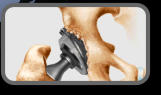
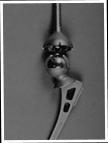
By the early 1950s, DR. McKee, a British orthopaedic surgeon, had designed prosthesis on the femoral side that articulated with a three
claw type cup that screwed into the acetabulum (the surface of the joint that the ball joint fits into). The initial high incidences of failure
resulted from the loosening of components as there was no adequate holding cement available to keep the prosthesis in place for long
periods of time.
It was throughout the 1960s that Hip replacement surgery became more widespread and available to patients. At the XIX World Congress of
Surgery/International College of Surgeons (1974) Dr. McKee presented results from the first 300 total hip prosthesis and concluded that the
most important principle was to obtain the firm fixation of components in the bone using screws, then later using acrylic cement.
Dr. San Baw
In 1960 a Burmese orthopaedic surgeon, Dr. San Baw who was chief of the orthopaedic surgery unit at the Mandalay General Hospital in
Burma pioneered the use of ivory hip prostheses to replace united fractures of the neck of the femur.
Dr. San Baw at first bravely used an ivory prosthesis to replace the fractured hip bone of an 83 year old Burmese Buddhist nun. He continued
his work up until the 1980s’ with considerable success and is now famous for it.
Dr. Peter Ring
Dr. Peter Ring, from Surrey, England began practising with cement-less
components and utilising metal-on-metal articulation from 1964.
Dr. Rings early Arthroplasty surgery provided surprisingly good results with up
to 97% of implants remaining intact than the previously used materials.
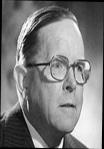
Sir John Charnley
Modern artificial joits have advanced thanks to the work of Professor John
Charnley from Manchester Royal Infirmary. Dr. Charnleys’ work in the field of
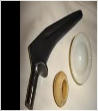
tribology resulted in a design that replaced previous ideas. Charnley's design
consisted of three parts which included a stainless steel metal femoral
component (the ball attached to the femur) connected to an Ultra high
molecular weight polyethylene acetabular component. Both of these prosthesis
were fixed to the bone using the third and last element; a specially
manufactured bone cement. However the small femoral head created further
wear and tear problems which made it suitable only for older patients with less
mobility, His idea did however aid in reducing the previous friction which led to
better clinical results. For over two decades, the ‘Charnley Low Friction
Arthroplasty design became the most used system, surpassing Dr. McKee
and Dr. Rings ambitions.
Dr. Javier Cabrera
Dr. J. Cabrera had pioneered implanting cemented total joint prosthesis within private clinics by1972
and had already exposed the unnecessary waste of money and effort which involved treating
palliative therapies and osteoarthritis of major joints, such as hips, knees, shoulders.
From years of extensive experience practising in the UK, Dr. Javier Cabrera applied his knowledge and forward thinking which enabled him to
perform the worlds first cemented total hip prosthesis implant surgery within a private clinic. At the time this was big news and was widely
reported by national and international news, especially in South America.
Dr. Cabrera expressed was even then still certain that osteoarthritis would not remain such a painful world wide problem for much longer.
Members from the International College of Surgeons XIX, (Sept 1974) which consisted of the worlds most renowned orthopaedic surgeons
were subsequently informed of Dr. Cabreras achievements with the notoriety he gained for introducing a needed change. From this time
forward, the FDA approved and granted the use of acrylic cement for prosthesis surgery world-wide.
Modern Day Prosthesis Surgery
Throughout the last decade, developments have been created in the hope of total hip replacement procedures.
A vast majority of older implants are made of a ceramic material rather than polyethylene, which some research indicates dramatically
reduces joint wear. Metal-on-metal implants are also gaining popularity in investigated and proven negative ways. Orthopaedic manufacturers
have now abstained from this type of hip prosthesis due to complications these prosthesis have created, such as metal corrosion and the
infiltration of metal particles within the body, and ultimately the brain.
Most implants are now fixed without cement and the prosthesis has a porous texture into which newly formed bone grows into. This method
however still proves to be too invasive.
Hip Resurfacing Surgery
Hip resurfacing is generally used as the alternative to total hip replacement and is often recommended for active patients under the age of 55. Hip replacement surgery was adapted in the 1970s’ and came with some success, but surgeons preferred to opt for hip replacement surgery because of early complications that resurfacing surgery created. Improvements over the last two decades have made hip resurfacing surgery more attractive and is has become a better option for patients, especially younger, more active people. Hip resurfacing surgery is vastly different from hip replacement surgery as the femur head is reshaped, then resurfaced with a metallic shell. A metal socket is then inserted into the pelvis to support the newly resurfaced femur joint. This surgical procedure reduces pain and ensures better joint stability. The chance of dislocation also lowers if resurfacing surgery is performed rather than with a total hip replacement. Revision surgery from resurfacing is not as complicated, due to less healthy bone removal.

Present Day
HISTORY AND EVOLUTION OF HIP REPLACEMENT SURGERY


Sticks and stones could not fix our Bones
The process of
manufacturing
prosthesis parts
requires large amounts
of energy which add
onto more unwanted
environmental pollution.


1950s
Dr. McKee designs a
prosthesis on the femoral
side that articulates with a
three claw cup that screwed
into the acetabulum.
1960
Dr. San Baw at the
Mandalay General Hospital
in Burma pioneers the use
of ivory hip prostheses to
replace united fractures of
the neck of the femur.
1964
Dr. Peter Ring starts a
clinical trial with cement- less
components with a metal-on-
metal articulation. 97% of
implants survived the years
of follow up.
1970s
Sir John Charnley replaces
previous designs prior to the
1970s. Charnley's design
consisted of three parts
which connected to an Ultra
high molecular weight
polyethylene ace tabular
component.
New York
A team of 35 International bio scientists,
manufacturers and doctors hold a summit on
arthritis.
Among other conclusions they discuss the
Inadequacy of arthritic classification and a need
for new treatments for the symptoms of bone
cartilage and joint structural abnormalities in the
stages of the disease.
Concerns in the scientific world about the
treatment for Arthrosis and economical
consequences of Arthroplasty surgery with its
environmental issues are raised.

Dr. Javier M. Cabrera L.M.S. F.I.C.S.
Information on
Osteoarthrosis and
how the Bio Hip can
help rid the world
from Arthritic pain.
Hip replacement
Surgery and its
countless problems
and risks.
With over 35 years experience in
orthopaedic/spinal surgery, Dr. Javier
Cabrera patents the Bio Total Hip
Dr. Javier Cabrera
The innovative design
and technology creating a
brighter future for Hip
Surgery.
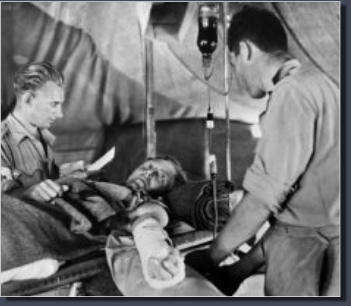
Orthopaedic surgery owes a great deal
of its development to its role in military
conflicts throughout history.


Bio Total Hip ® www.biototalhip.info

Historical Moments:



Is there a need to Expend $83 Billion on Prosthesis surgery?
In the
Journal of Arthritis
Dr. J. Cabrera gives insight into why the
costs associated with Joint prosthesis surgery are unnecessary and reveals innovative
solutions which showcase the way forward…






Hip
replacement surgery
is in no doubt one of
the most important
orthopaedic
breakthroughs over
the last 60 years and
has has eased suffering
and disability worldwide.
After more than 60 years since its implantation, the time
is now to create modern biotechnology to resurface
defects in joints, similar to what dentists have done with
tooth cavities.
Hip replacement surgery from
as early as the 17th century
had experimented with the use
of materials such as celluloid,
silver plates, rubber struts,
magnesium, zinc, glass, pyres,
de calcified bones, wax,
muscle tissue celluloid and
other failed materials.
Unfortunately no long term
success stories have been
recognised whilst
experimenting with these
materials as patients biological
systems reacted against them.
These materials were also
unable to cope with the
stresses of supporting body
weight for long periods. The
early experimental days did
however pave a way for
surgeons who endured to perfect
hip replacement surgery. Primitive
surgeries were carried out to
replace joints and were plagued
with a high risk of infection, which
was inherent before the wide
advent of antibiotics..
Artificial hips gradually gained notoriety by the interest
in medical and public knowledge, though it was rare for
someone to undergo full hip replacement surgery.
Experimental attempts to replace joints with Teflon
seemed like a good idea at the time, but the Teflon wore
out within two to three years and eventually patients
suffered osteolysis; as the bone started to dissolve and
then re-absorbed by the body.
Though historical hip
replacement surgery appears to
be rudimentary, it was
considered a better alternative
compared to the crippling pain
endured by arthritis.
Another problem with these
experimental materials was that
the articulating surfaces
inserted between joints were
unable to be lubricated by a
patients body, which created
wear and tear, thus making it
necessary to replace joints with
revision surgery.
Artificial joints were eventually
manufactured from steel and
chrome which had a better
‘surface life’ due to superior
strength and being non
corrosive.
Dr McKee
By
the early 1950s, DR. McKee, a British
orthopaedic surgeon, had designed
prosthesis on the femoral side that
articulated with a three claw type cup that screwed into
the acetabulum (the surface of the joint that the ball joint
fits into). The initial high incidences of failure resulted
from the loosening of components as there was no
adequate holding cement available to keep the
prosthesis in place for long periods of time.
It was throughout the 1960s that Hip replacement
surgery became more widespread and available to
patients. At the XIX World Congress of
Surgery/International College of Surgeons (1974) Dr.
McKee presented results from the first 300 total hip
prosthesis and concluded that the most important
principle was to obtain the firm fixation of components in
the bone using screws, then later using acrylic cement.
Dr. San Baw
In 1960 a Burmese orthopaedic surgeon, Dr. San Baw
who was chief of the orthopaedic surgery unit at the
Mandalay General Hospital in Burma pioneered the use
of ivory hip prostheses to replace united fractures of the
neck of the femur.
Dr. San Baw at first bravely used an ivory prosthesis to
replace the fractured hip bone of an 83 year old
Burmese Buddhist nun. He continued his work up until
the 1980s’ with considerable success and is now
famous for it.
Dr. Peter Ring
Dr. Peter Ring, from Surrey, England began
practising with cement-less components and utilising
metal-on-metal articulation from 1964.
Dr. Rings early Arthroplasty surgery provided
surprisingly good results with up to 97% of implants
remaining intact than the previously used materials.
Sir John Charnley
Modern artificial joits have advanced thanks to the
work of Professor John Charnley from
Manchester Royal Infirmary. Dr. Charnleys’
work in the field of tribology resulted in a
design that replaced previous ideas.
Charnley's design consisted of three parts which
included a stainless steel metal femoral component (the
ball attached to the femur) connected to an Ultra high
molecular weight polyethylene acetabular component.
Both of these prosthesis were fixed to the bone using
the third and last element; a specially manufactured
bone cement. However the small femoral head created
further wear and tear problems which made it suitable
only for older patients with less mobility, His idea did
however aid in reducing the previous friction which led
to better clinical results. For over two decades, the
‘Charnley Low Friction Arthroplasty design became the
most used system, surpassing Dr. McKee and Dr. Rings
ambitions.
Dr. Javier Cabrera
Dr. J. Cabrera had pioneered implanting


Present Day
HISTORY AND EVOLUTION OF HIP REPLACEMENT SURGERY




Sticks and stones could not fix our Bones
The
process
of
manufact
uring
prosthesi
s parts
requires
large
amounts
of energy
which
add onto
more
unwante
d
environm
ental
pollution.




1950s
Dr. McKee
designs a
prosthesis
on the
femoral
side that
articulates
with a three
claw cup
that
screwed
into the
acetabulum
.
1960
Dr. San
Baw at the
Mandalay
General
Hospital in
Burma
pioneers
the use of
ivory hip
prostheses
to replace
united
fractures of
the neck of
the femur.
1964
Dr. Peter
Ring starts
a clinical
trial with
cement-
less
component
s with a
metal-on-
metal
articulation.
97% of
implants
survived
the years
of follow
up.
1970s
Sir John
Charnley
replaces
previous
designs
prior to the
1970s.
Charnley's
design
New
York
A team of 35
International bio
scientists,
manufacturers and
doctors hold a
summit on arthritis.
Among other
conclusions they
discuss the
Inadequacy of
arthritic
classification and a
need for new
treatments for the
symptoms of bone
cartilage and joint
structural
abnormalities in the
stages of the
disease.
Concerns in the
scientific world
about the treatment
for Arthrosis and
economical
consequences of
Arthroplasty surgery
with its
environmental
issues are raised.

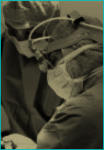
Dr. Javier M.
Cabrera
L.M.S.
F.I.C.S.
Informati
on on
Osteoart
hrosis
and how
the Bio
Hip can
help rid
the
world
from
Arthritic
pain.
Hip
replace
ment
Surgery
and its
countles
s
problem
s and
risks.
With over 35
years
experience in
orthopaedic/sp
inal surgery,
Dr. Javier
Cabrera
patents the
Bio Total Hip
Dr. Javier Cabrera
The
innovative
design
and
technolog
y creating
a brighter
future for
Hip
Surgery.
Orthopaedic
surgery owes a
great deal of its
development to
its role in
military
conflicts
throughout
history.